Pillar · Adoption
An adoption strategy that survives the first 90 days
Assess honestly, pick a pilot window, prove the work before rollout, handle resistance, and decide whether to expand or stop.
4 min read
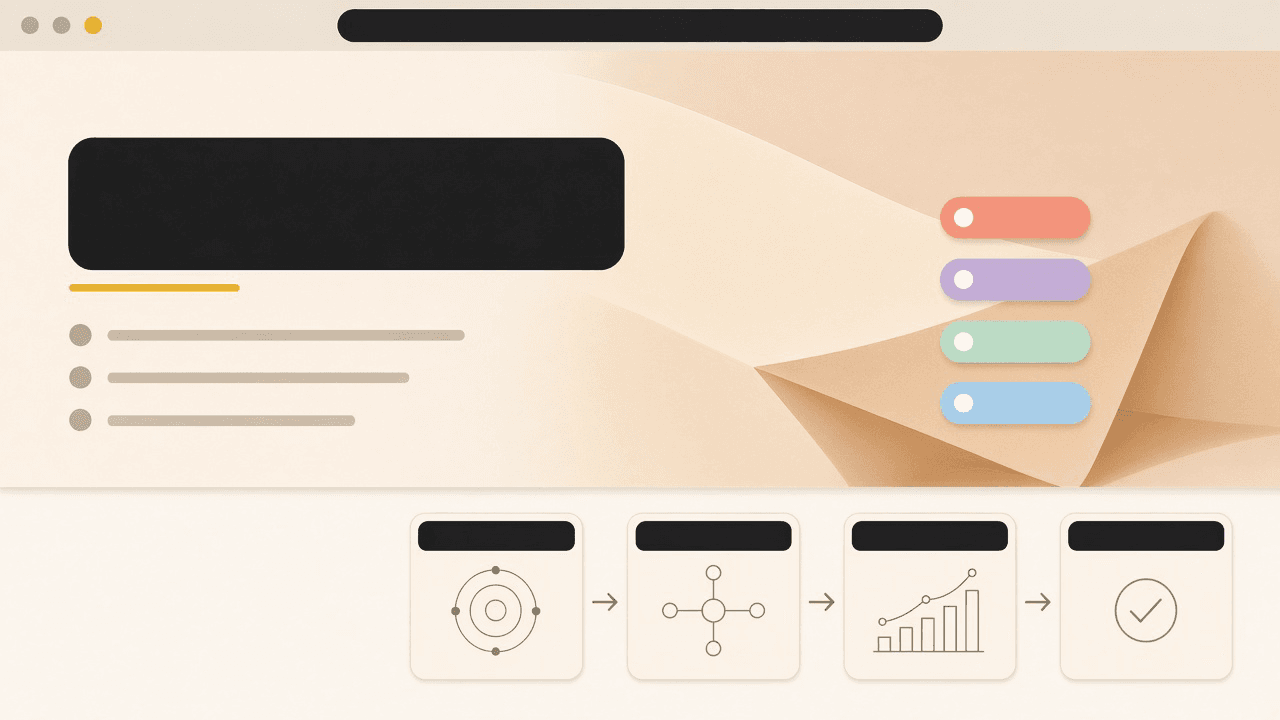
Ninety days is long enough for a small shop to learn a habit and short enough to admit a miss. It is not long enough to “transform the business.” Treat the quarter as three decisions: what you will try, whether the proof held, and whether anyone besides the enthusiast will keep doing it.
In short. Assess before you buy, prove one workflow in a real window, roll out only after that proof, and keep a stop. Help is for when ownership runs out, not for when the kickoff feels exciting.
Assess honestly
Before a purchase, write down the tools you already pay for, who opens them, and which workflows actually move the week. The point is to see the gap between the stack on the credit card statement and the stack in people’s hands.
Name who owns AI today. If the answer is the owner, after hours, say that. A strategy that assumes a coordinator you do not have will fail in week three, when the coordinator turns out to be the same person answering the phone.
The spoke Assess before you buy is the worksheet. The 30-day plan is the shorter field version: one week to look, one week to pick and baseline, two weeks to shadow, then a decision.
Pick a pilot window
A window has a start, a stop, and a definition of done. For a shop, one to six weeks is the honest range. Daily work can be judged in one or two. Weekly work needs longer, and still needs a date.
Success is observable. “The intake draft matches the fields we already collect, and the person on the desk will use it.” Stop criteria are equally observable. “Customer data showed up in a place our rule forbids.” “The reviewer is rewriting every draft.” “The owner is the only one who remembers the pilot exists.”
Put the window on a calendar the team sees. A pilot that lives in a side chat will be run over by Tuesday.
Prove before rollout
Proof is a shadow, not a mandate. The old path still completes the work. The new path produces a draft. You compare. The shadow-mode guide is the operating detail.
Rollout is what you do after keep. Limited seats for the people who touched the pilot. A written checkpoint. A week of watching whether the behavior holds when you are not in the room. Only then a wider group.
Buying seats for the whole company on day one is not rollout. It is a hope that presence creates habit. It does not.
Handle resistance
Resistance is usually specific. “It got the gate code wrong.” “I do not want a customer to hear that voice.” “This adds a step to a job that was already late.” Treat those as product notes.
The stance that holds up in a small team: AI assists the work. It does not replace the judgment of the person whose name is on the outcome. Say that, and then make it true by keeping the checkpoint. If you say it and ship auto-send, you taught the opposite lesson.
Do not run a campaign about the future of work. Run the pilot. People adopt what saves them a concrete annoyance. They ignore a town hall.
Measure without theater
Use the same signals as the build cluster: time on the task, errors you can point to, and whether the operator wants the draft next month. Read what to measure before you put a number in a staff note.
A ninety-day review that opens with a percentage nobody collected will not survive the first question from the person who did the work. Open with the instances instead.
Decide: expand or stop
At the end of the window, and again around day 90 if you kept it, choose:
- Expand to the next role or the next workflow, one at a time, with the same checkpoint discipline.
- Hold at the current scope because it works and does not need to grow.
- Stop because ownership faded or the risk showed up.
Holding is allowed. Not every kept workflow should become a platform. Stopping is allowed. Write it down so the next vendor demo does not restart the same argument from zero.
When to bring help
Bring help when the limit is capacity or complexity, not when you want someone to be excited for you. Signs: no one can own the output, the workflow crosses locations or systems you cannot watch, or the same pilot has been revised into mush because the shop cannot spare the hours to finish the design.
Managed AI is the path where a team runs the agents, tools, and memory with you. A Fractional CTO engagement is a short door toward that and toward LaunchpadOS, not a destination and not a substitute for an operator. The rate and the shape of the engagement are quoted on arcasya.ai. Book discovery when you want a person to look at the ninety days with you. Bring the decision note, including the stops.
Keep going
- Assess before you buy
Look at current tools, real owners, and real risk before another subscription lands. The assessment is the strategy.
- When to bring Managed AI
Capacity, complexity, and multi-step work are reasons to bring a team. Curiosity is not. The Fractional CTO door leads toward Managed AI and LaunchpadOS.
- Shadow-mode pilots in one to two weeks
Run the new path beside the old one, compare outputs, and keep a human checkpoint before anything reaches a customer.